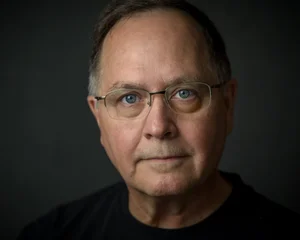
Your Headshot Is a Message — Build a Portfolio That Matches Your Roles
Your headshot is not a picture. It’s communication.
Professionals rarely interact with their audience only in person. We introduce ourselves through LinkedIn, company sites, proposals, speaker bios, email signatures, Zoom profiles, press releases, and marketing materials. In each place, your portrait is doing a job: it is a visual first impression that sets expectations before a single word is read.
If your visual message and your written/verbal message don’t match, people feel the mismatch instantly—often without realizing why. You may be saying “strategic and approachable,” while the image says “formal and distant,” or saying “creative and modern” while the portrait feels “stiff and outdated.” Alignment matters.
One image rarely fits every role
Most professionals wear multiple hats. A single headshot can’t communicate effectively across every context.
Consider a few common examples:
Executive / leadership presence (board, leadership page, investor materials)
Client-facing trust (services, consulting, healthcare, finance)
Speaker / educator (conference programs, workshop promotions)
Recruiting and team culture (company “About,” hiring pages)
Creative authority (artists, designers, marketing leaders, media professionals)
Each role has a different audience—and different expectations for tone, approachability, formality, and energy.
The portfolio approach: roles + audiences + channels
Instead of asking, “Do I need a headshot?” ask:
What roles do I need to show up as this year?
Who is my audience in each role?
Where will these images appear (channels)?
What should people feel when they see the photo?
What action do I want them to take next?
From there, you build a small portfolio of portraits that cover the real-world uses of your professional identity.
A practical starting set might include:
Classic headshot (clean, neutral, high versatility)
Best for LinkedIn, bios, websites, press.Environmental portrait (in your workspace or a relevant setting)
Best for “about” pages, brand storytelling, speaking, media.Role-specific variant (more formal OR more approachable)
Chosen based on your primary audience (clients vs. internal vs. public).
The three levers that shape the message
Whether you choose studio or environmental, your portrait communicates through three major levers:
Wardrobe & styling: formality, taste, industry fit, confidence
Expression & body language: approachable vs. authoritative; warm vs. analytical
Background & lighting: clean and timeless vs. contextual and story-driven
A neutral backdrop can communicate clarity and professionalism. An environmental background can communicate credibility, context, and personality—if it’s controlled and not distracting.
Your goal: visual coherence with your professional brand
Your written brand might be:
“Trusted advisor”
“Innovative leader”
“Creative problem solver”
“Calm under pressure”
“Modern and client-centered”
Your portraits should visually reinforce that message.
If you’d like, we can design your session by mapping roles → audiences → use cases, then building the image set intentionally—rather than hoping one headshot covers everything.
Call to action
If you want a portrait set that’s aligned to your roles and the audiences you serve, RSB Photo Media can help you plan the look, setting, wardrobe, and expressions so your images communicate as clearly as your words.